Dry is not cured
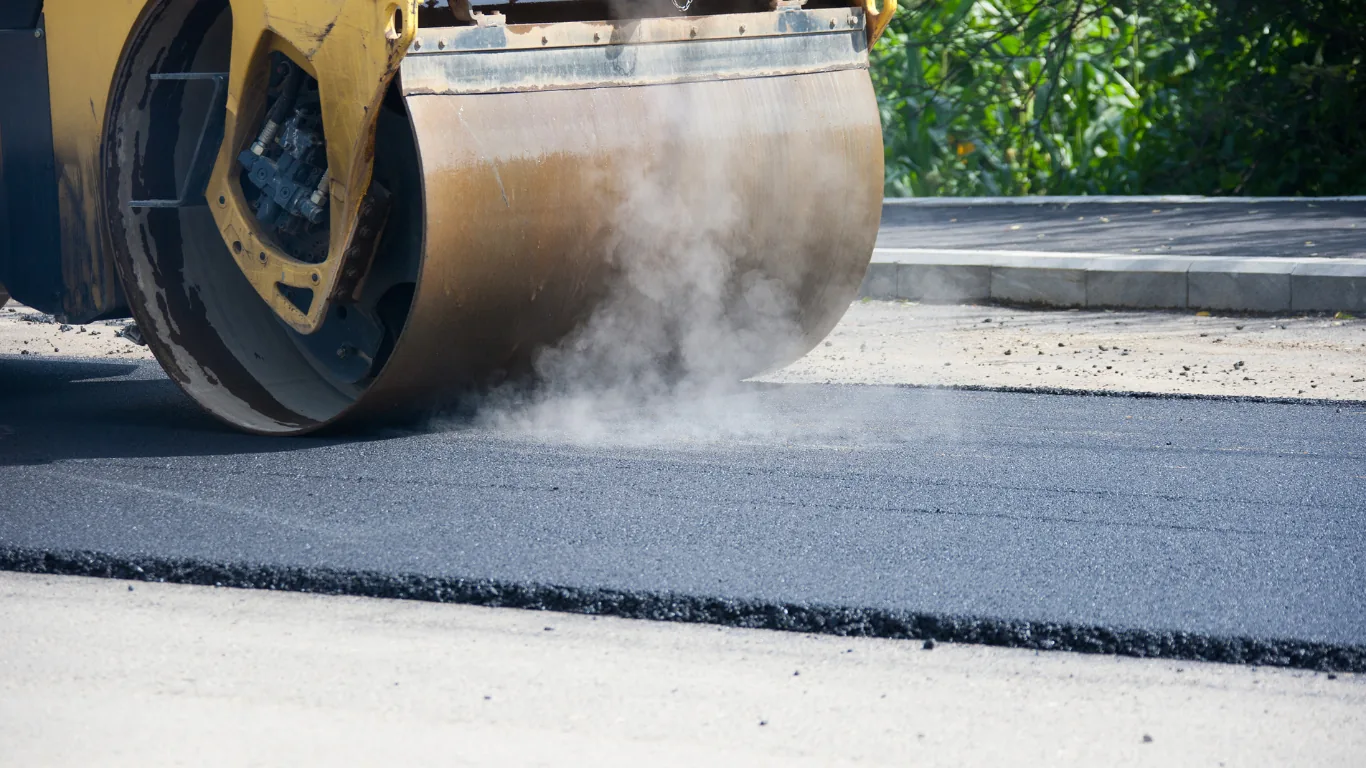
Drying is the surface going firm enough to drive on. Curing is the oils in the mix working their way out and the material reaching its final hardness, and that takes months. In between you have a surface that carries a car perfectly well and still deforms under a concentrated load.
The three things that leave marks
Sharp stationary turns — power-steering a wheel while parked will scrub a mark into a green mat that you cannot buff out. Point loads: motorcycle and trailer jack stands, bike kickstands, ladder feet and furniture legs all press through. And heat: a new surface is softest on the hottest afternoons, so a July heatwave in month two is when the damage gets done.
Heavy vehicles, in particular
Skip bins, delivery lorries, concrete trucks and moving vans. If you have building work planned, tell us before we pave rather than after — there are ways to sequence around it, and none of them work retroactively.
Give the edges room
Asphalt edges have nothing supporting them from the side, which is why they crumble first. Keep wheels off the very edge for the first season, and if there is a soft shoulder beside the drive, building it up level with the pavement is worth doing.
Do not seal it yet
Sealcoating belongs after the cure, not during it. Ask us when your surface is ready and we will tell you honestly — usually the season after it went down.
Planning a new driveway or lot? Call (434) 443-8035 and we will walk the site, check the grade and give you a free estimate.