UV and oxidation stopped at the surface
Sunlight is what turns black asphalt grey and brittle. The binder oxidises, the surface loses flexibility, and then it starts shedding aggregate. A seal coat takes that hit instead of your pavement.

Sealcoating acts as a protective barrier against the elements: UV rays, water, oil spills and chemicals. By preventing oxidation and surface deterioration it significantly extends the life of asphalt pavement. It is also, dollar for dollar, the highest-return maintenance decision a property owner makes — a few hundred dollars on a schedule against a resurfacing bill you can defer for years.
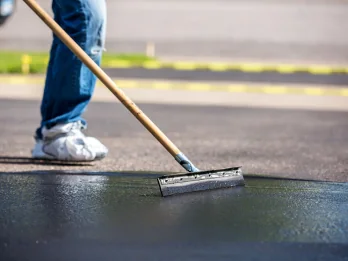
Sunlight is what turns black asphalt grey and brittle. The binder oxidises, the surface loses flexibility, and then it starts shedding aggregate. A seal coat takes that hit instead of your pavement.
A sealed surface sheds water rather than letting it work into the pavement, freeze, and lever it apart. In a climate that crosses freezing and thawing repeatedly through a Virginia winter, that is the whole ball game.
Petroleum products dissolve asphalt binder, which is why parking spaces fail in the middle where the cars drip. A seal coat is a chemical barrier as much as a physical one.
Every two to three years keeps the protection continuous and the surface a fresh black. Left long enough that the pavement is already grey and raveling, sealing is no longer the right tool.
We take sealcoating work across Charlottesville and the eight counties around it — Albemarle, Louisa, Fluvanna, Nelson, Greene, Orange, Madison, Culpeper. That is 56 communities, from in-town driveways to private roads a long way off the state route.
We recommend sealcoating every 2 to 3 years. That protects the asphalt from UV rays, water damage and cracking, helps extend its lifespan and keeps a fresh appearance. Heavy-traffic commercial lots often want the shorter end of that range; a quiet residential driveway can sit at the longer end.
Not right away. New asphalt needs to cure before it is sealed — sealing too early traps the oils that need to leave the mix. New pavement takes roughly 6 to 12 months to fully cure, and sealcoating is a job for after that window, not during it.
Plan on staying off it for at least 24 hours, and longer in cool or humid weather when the cure is slower. We will tell you the window for your job and the conditions on the day, and it is worth respecting — tyre marks in a green seal coat are permanent.
Up to a point. On a surface that is intact but fading, it is the best money you can spend. On pavement that is already raveling, badly cracked or coming apart, sealer is cosmetic and the honest answer is repair or resurfacing first. We will tell you which one you are looking at.
Most jobs are two of these together — seal the cracks and then seal the surface, patch the holes and then overlay. Doing them in the right order is most of what makes them last.
Tell us what you are looking at and we will come out, assess it and give you a number. Monday–Saturday, 7:00 am – 6:00 pm. Closed Sunday.