
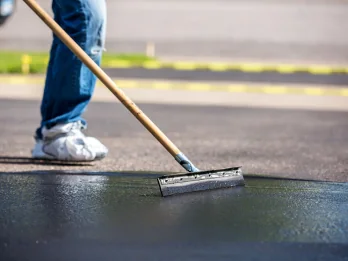
What the seal coat is actually doing
Three things, and none of them are cosmetic. It blocks UV, which is what oxidises the binder and turns black asphalt grey and brittle. It sheds water, which is what gets into the pavement, reaches the base and does the structural damage. And it resists petroleum — oil and fuel dissolve asphalt binder, which is why parking spaces fail in the middle where the cars drip rather than in the lanes where they drive.
Two years or three?
Traffic volume and exposure decide it. A commercial lot with constant turn-in traffic and oil drip wants the two-year end. A quiet residential driveway that sees two cars and gets some shade can comfortably sit at three. Full sun on an unshaded south-facing drive shortens it; a surface under heavy tree cover has less UV but more moisture sitting on it, so it is not the free pass it looks like.
When it is too early
New asphalt must cure before it is sealed. Pavement takes roughly 6 to 12 months to fully cure, and sealing during that window traps oils that need to leave the mix. A new driveway sealed in its first season is a driveway someone charged you to damage.
When it is too late
This is the one worth knowing. On a surface that is intact but fading, sealcoating is the best money in asphalt. On pavement that is already raveling — shedding aggregate, rough underfoot, coming apart at the edges — sealer is a cosmetic coat over a structural problem. It will look better for a season and change nothing. At that point the honest recommendation is repair or resurfacing, and we would rather tell you that than take the sealing job.
Order of operations
Cracks get sealed before the surface does. Sealcoat sprayed across an open crack bridges it for a few weeks and then splits along exactly the same line, and you have paid for both jobs to get one. Seal the cracks, then seal the surface.
Not sure which category your surface is in? That is what the free assessment is for. Call (434) 443-8035 and we will come and look.