Gravel to asphalt
A long-established gravel drive is often already most of a base, which is why paving a rural driveway can come in lower than people expect. It still needs grading, depth and compaction — but you are not starting from nothing.

A driveway is the first thing anyone sees of a house and the last thing most people budget for. It is also, in this part of Virginia, frequently three hundred feet of it running off a county road, which makes drainage and base the deciding factors rather than an afterthought.
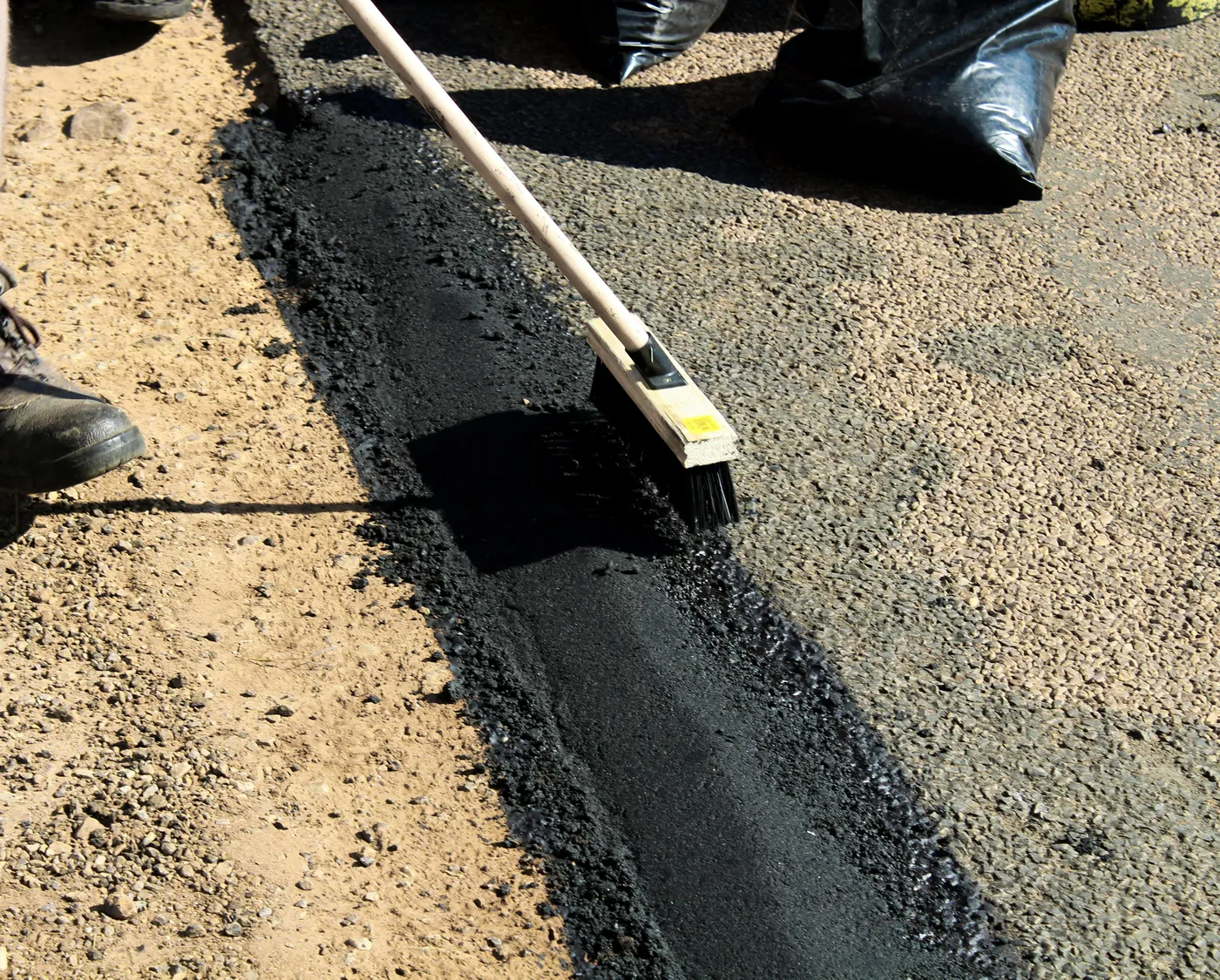
A long-established gravel drive is often already most of a base, which is why paving a rural driveway can come in lower than people expect. It still needs grading, depth and compaction — but you are not starting from nothing.
On a sloped drive, where the water goes is the whole design. Get it wrong and you have an ice sheet in January and a washed shoulder by April.
Once it is down, sealcoating every two to three years is what keeps it black and keeps water out. It is the least expensive line in the whole life of a driveway.
A new driveway is a real number. Financing through Service Finance Company means it does not have to come out of one month.
Most jobs are two of these together — seal the cracks and then seal the surface, patch the holes and then overlay. Doing them in the right order is most of what makes them last.
A full range of asphalt services: paving, resurfacing, sealcoating, crack sealing, pothole patching and asphalt repairs — for residential, commercial and municipal projects alike.
Asphalt dries within 24 to 48 hours, but it takes about 6 to 12 months to fully cure. During that time, avoid heavy loads and sharp turns to maintain the best surface quality.
We recommend sealcoating every 2 to 3 years to protect your asphalt from UV rays, water damage and cracks, helping extend its lifespan and maintain a fresh appearance.
Potholes form due to water infiltration, freeze-thaw cycles and heavy traffic. Regular maintenance, such as crack sealing and sealcoating, can prevent potholes and prolong the life of your asphalt.
If your asphalt has widespread cracking, potholes or structural issues, resurfacing — adding a new asphalt layer — may be a cost-effective solution. However, if the foundation is severely damaged, a full replacement might be necessary. We offer free assessments to determine the best option for you.
Call (434) 443-8035 or send the form. Monday–Saturday, 7:00 am – 6:00 pm. Closed Sunday.